

Electric cars sound exciting on paper.
Low running cost, silent drive, no fuel tension…
But the real question is —
What happens after living with one for 10,000 km?
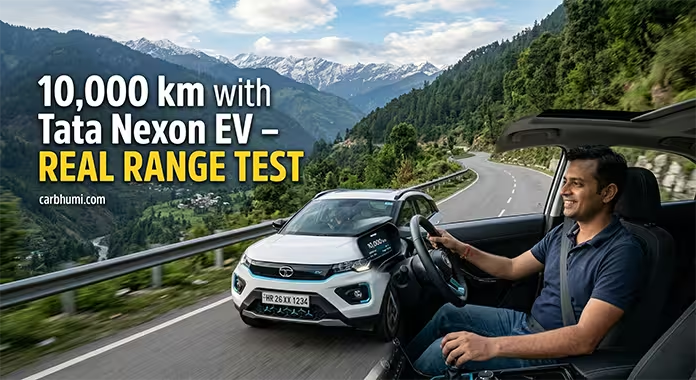
We spent months with the Tata Nexon EV, driving it through city traffic, highways, and daily routines — just like any Indian family would.
This is not a spec-sheet review.
This is the real story.

The Beginning – Excitement Meets Doubt
The day we brought the Nexon EV home, there was excitement… but also a small worry.
- “Will the range be enough?”
- “What if the battery runs out?”
- “Is charging going to be a headache?”
These are real concerns — and if you’re planning to buy an EV, you’ve probably had them too.

Daily Life – Where Nexon EV Feels Perfect
For city driving, the Nexon EV feels almost magical.
- No engine noise — just smooth, silent motion
- Instant acceleration at traffic lights
- No gear shifts, no clutch stress
In bumper-to-bumper traffic, it actually feels less tiring than a petrol car.
And the best part?
You stop worrying about petrol pumps completely.

Real Range Test – Truth After 10,000 km
Let’s talk about what truly matters: range.
Claimed Range vs Real World
- Claimed: ~400+ km
- Real (City): 280–320 km
- Real (Highway): 240–280 km
These numbers come after months of mixed driving — not ideal conditions.
What Affects Range?
We noticed range changes based on:
- Driving speed
- AC usage
- Traffic conditions
- Driving style
Drive calmly, and the car rewards you.
Drive aggressively, and the battery drops faster.
Simple.

Charging Experience – Easier Than Expected
Before buying, charging felt like a big concern.
After 10,000 km? Not anymore.
Home Charging 🏠
- Overnight charging becomes a habit
- Just plug in like a phone
- Wake up to a “full tank”
Public Charging ⚡
- Still improving in India
- Works well in metro cities
- Needs planning for long trips
It’s not difficult — just different from petrol life.

Long Drives – Possible, But Needs Planning
Yes, you can take the Nexon EV on highways.
But here’s the honest truth:
- You need to plan charging stops
- You can’t drive endlessly like diesel cars
- Fast chargers save time, but availability varies
Once you understand this, long trips become manageable — even enjoyable.

Cost of Running – The Biggest Win
This is where the Nexon EV truly shines.
Compared to petrol cars:
- Charging cost is significantly lower
- Maintenance is minimal
- No engine oil, no complex parts
After 10,000 km, the savings feel real.
You don’t just hear about it — you see it in your wallet.

Comfort & Features – Still a Nexon at Heart
Even as an EV, it retains everything people love about the Nexon:
- Comfortable seating
- High driving position
- Solid road presence
- Good feature list
It doesn’t feel like a compromise.
It feels like a proper SUV — just electric.

The Challenges – Let’s Be Honest
No car is perfect, and the Nexon EV has its downsides.
- Range anxiety (especially in the beginning)
- Charging network still growing
- Highway planning required
- Slight drop in range over time (normal for EVs)
But none of these are deal-breakers — just things to understand.

After 10,000 km – What Changed?
Something interesting happens when you live with an EV for a long time.
You stop thinking about:
- Fuel prices
- Engine noise
- Gear shifting
And you start enjoying:
- Quiet drives
- Smooth acceleration
- Low running costs
It’s not just a different car.
It’s a different driving experience.

Final Verdict – Is Nexon EV Worth It?
After 10,000 km, the answer is clear:
Yes — but only if it fits your lifestyle.
Perfect For:
- Daily city commuting
- People with home charging
- Those who want lower running costs
Not Ideal For:
- Frequent long-distance highway users
- People without charging access
CarBhumi Verdict ⭐⭐⭐⭐☆ (4.3/5)
The Tata Nexon EV proves that electric cars are no longer the future —
they are the present.
It’s not perfect.
But it’s practical, affordable, and surprisingly easy to live with.
And once you get used to it…
going back to petrol feels old.